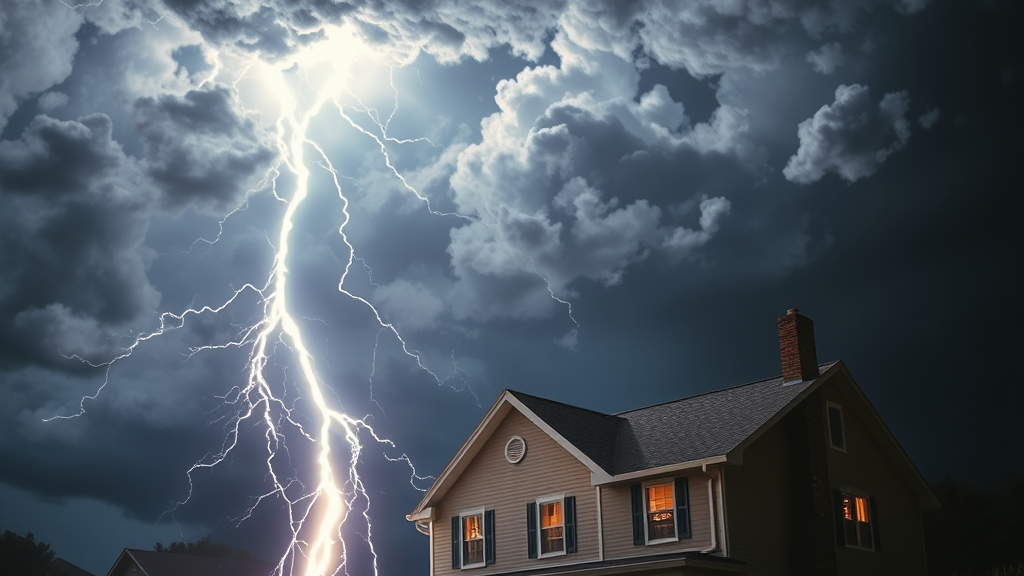
Lightning is a large electrical discharge in the atmosphere, typically occurring between clouds, within clouds, or between a cloud and the ground during thunderstorms.
Basic Physical Characteristics
Voltage
- A typical lightning bolt can reach about 100 million to 1 billion volts.
Current
- Typical current: about 30,000 amperes (30 kA).
- Very strong bolts can exceed 200,000 amperes.

Temperature
- Lightning channels can reach about 30,000–50,000°F (16,000–27,000°C).
- This is 5 times hotter than the surface of the Sun (~10,000°F).
Speed
The return stroke can move up to about 220,000–270,000 mph.
The stepped leader travels about 100,000 mph (160,000 km/h).
Frequency on Earth
That equals about 3–4 million lightning strikes per day worldwide.
Earth experiences about 40–50 lightning flashes per second.
Types of Lightning
Intra-cloud (IC)
- Lightning inside a cloud.
Cloud-to-cloud (CC)
- Lightning between different clouds.
Most lightning (about 75–80%) occurs inside clouds.
Energy
A single lightning strike releases about:
1–10 billion joules of energy
Lightning Channel
- Diameter: roughly 1–2 cm (about the width of a finger)
- Length: often 5–10 km, but can exceed 20 km in large storms.
Thunder
Thunder happens because:
This produces a shock wave, which we hear as thunder.
Lightning heats air extremely fast.
The air expands explosively.
Common types include:
Cloud-to-ground (CG)
- Lightning from a cloud to the Earth’s surface.
 Esoplanet